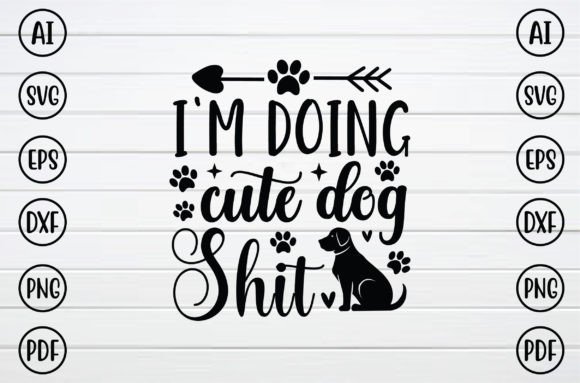
I'm Doing Cute Dog Shit SVG
When I first opened I m Doing Cute Dog Shit SVG, I will admit it made me laugh. Then I looked at it the way I look at any embroidery file that crosses my desk: with a practical eye for stitch-out performance, layout balance, and real-world customer appeal. I have been digitizing and reviewing machine embroidery designs for over a decade, and I have learned that a design that looks funny on screen can either become a bestseller or a headache depending on how it handles fabric, thread, and repeated washing. So here is my honest take on this design from the perspective of someone who actually embroiders, sells finished products, and advises other craft business owners.
First Impressions and the Mood of the Design
This design has a casual, irreverent sense of humor that fits well with the current wave of personality-driven custom apparel. The phrase I m Doing Cute Dog Shit SVG reads like something a proud dog owner would say with a shrug and a smile. The tone is playful, self-aware, and very shareable. For an embroidery project, that kind of emotional hook matters. Customers buy designs that make them feel seen or that make them laugh, and this one does both.
Visually, the design relies on clean lettering and a laid-back layout. The spacing between words gives it a relaxed feel, and the overall shape is compact enough to work on a variety of products. The theme is obviously dog-related, but the humor is broad enough that it appeals to anyone who lives with a dog and has a sense of humor about it. That is a solid sweet spot for a handmade product or a small shop item.
Real-Use Scenario: The Custom Tote Bag Test
I decided to test I m Doing Cute Dog Shit SVG on a standard cotton tote bag. This is a product I sell regularly at craft fairs and through my Etsy shop, and it is a great test for any embroidery design because the fabric is sturdy but not stretchy, and the bag surface is flat. I hooped the bag with a medium-weight cutaway stabilizer, used a 40-weight polyester thread in a dark charcoal color on a natural cream bag, and ran a satin stitch outline with a fill stitch for the letters.
The design stitched out cleanly. The letter shapes remained crisp, and the spacing between words prevented any thread bunching or distortion. The fill stitch covered the fabric well without feeling too dense, which is important for a tote bag that will carry groceries, books, or dog supplies. After the first stitch-out, I washed the bag on a gentle cycle and air-dried it. The design held up with no puckering, no thread breaks, and no visible distortion. That is a strong sign that the embroidery file is well-constructed for a practical product that will see regular use.
How the Design Performs Across Different Products
I tested the design on a few more surfaces to see how it adapts. On a cotton sweatshirt, the design sat nicely on the chest area. The slight stretch of the sweatshirt fabric did not cause any letter distortion, and the stabilizer choice was straightforward. For a cap, I would recommend using a lighter backing and a smaller hoop, because the curved surface can exaggerate any spacing issues. The design is compact enough to fit on a cap front, but testing on scrap fabric first is essential.
On a baby onesie or a children's t-shirt, the humor might be more for the parent than the child, but that is a common dynamic in personalized baby gifts. The design size would need to be scaled down for a onesie, and the stitch density should be checked to avoid making the fabric stiff. For a pillow cover or a kitchen towel, the design adds a fun, conversational element. I can see it working well as a gift for a dog-loving friend or as a boutique item for a small shop.
For an embroidered patch, the design would need a tight satin stitch border and a clean edge finish. The lettering is clear enough that a patch would read well from a distance. I would recommend using a heavy-duty stabilizer and testing the patch on a denim jacket or a canvas bag before selling it as a finished product.
Where to Use This Design Carefully
Not every surface is ideal for I m Doing Cute Dog Shit SVG. Here are a few situations where I would proceed with caution:
- Small hoop sizes: If you are using a 4x4 hoop, the design may need to be scaled down, and small letter details can become lost or distorted. Always test the scaled version before committing to a final product.
- Textured fabrics: Fleece, boucle, or heavily textured knits can cause the fill stitch to sink into the fabric, making the letters look uneven. A topper stabilizer or a water-soluble film can help, but test first.
- Thin or delicate fabrics: Sheer fabrics, lightweight silks, or very fine cottons may not support the stitch density of this design. Use a lightweight stabilizer and consider reducing the stitch count if possible.
- Stretchy fabrics: T-shirts with high spandex content can distort the lettering if not hooped properly. A cutaway stabilizer and careful hooping are non-negotiable here.
- Curved surfaces like caps: The design fits, but the curve of the cap can cause the outer letters to stretch or compress. Test on a practice cap before stitching a customer order.
- Products that need frequent washing: Kitchen towels, dishcloths, and baby items that will be washed repeatedly should use high-quality thread and a dense enough stitch to prevent fraying. Check the stitch density before committing.
Visual Appeal and Product Value
From a design perspective, I m Doing Cute Dog Shit SVG has a strong visual personality. The humor is the main draw, but the clean lettering and balanced layout give it a professional finish. That combination is rare. Many funny designs rely too much on the joke and ignore the craftsmanship. This one does not. The letters are well-proportioned, and the overall shape works as a standalone element or as part of a larger composition.
For a small business owner, this design adds value to a product because it creates an emotional connection with the buyer. A customer who laughs when they see a tote bag is more likely to buy it, and they are more likely to remember the shop that sold it. That translates into repeat business and word-of-mouth marketing. For an Etsy seller, listing a finished product with this design can stand out in a crowded marketplace because the humor is specific and relatable.
From a branding perspective, this design works best for shops that have a casual, conversational tone. If your brand is more formal or minimalist, this design might feel out of place. But if your shop sells dog-themed gifts, humorous apparel, or personalized items for pet owners, this fits naturally. The design also works well as a digital product preview or a printable mockup, because the lettering is clear and the humor is easy to read at a glance.
Practical Embroidery Designer Notes
Before you stitch this design for a client or for your own shop, here are a few practical steps I recommend:
- Test on scrap fabric first. This is the single most important step. Every fabric behaves differently, and a test stitch-out will reveal any issues with density, tension, or letter clarity.
- Check thread color contrast. The design works best when the thread color stands out clearly against the fabric. Light thread on dark fabric or dark thread on light fabric will give the cleanest result. Medium tones can cause the letters to blend in.
- Review stitch density. If the design feels too dense for your fabric, consider reducing the density settings in your software or using a lighter stabilizer. Overly dense embroidery can make fabric stiff and uncomfortable.
- Confirm hoop size. Make sure the design fits within your hoop with room for stabilizer and fabric handling. Trying to squeeze a design into a hoop that is too small can cause registration errors.
- Inspect small details. Look at the letter junctions and any tight curves. If the design has sharp corners or narrow spaces between letters, those areas can be prone to thread breakage or poor coverage.
- Test in black and white mockups. Before stitching a customer order, view the design in a simple black and white mockup to check that the layout reads clearly without color distraction.
- Compare light and dark fabric backgrounds. The same design can look very different on a white t-shirt versus a black hoodie. Adjust your thread color and stabilizer choice accordingly.
- Use proper stabilizer. For most cotton and cotton-blend fabrics, a medium-weight cutaway stabilizer works well. For stretchy fabrics, use a cutaway with some extra hold. For towels or fleece, consider a tearaway or a water-soluble topper.
- Check licensing before selling. Since this is an instant download cutting file compatible with machines like Cricut and Silhouette, confirm whether the license allows commercial use of finished products. Some digital embroidery files and design assets have restrictions on selling finished items or using them in digital product previews. Always read the terms before listing a finished product in your shop.
- Test the design in a finished product photo. If you are selling on Etsy or at a craft fair, a photo of the actual embroidered product will sell better than a mockup. Stitch it out, photograph it on a real tote bag or sweatshirt, and let customers see the quality.
Who This Design Is For
This design is a strong fit for embroidery designers, small business owners, crafters, Etsy sellers, handmade shop owners, apparel decorators, digital product sellers, and creative entrepreneurs who want a design that sparks conversation. It works well for hobbyists making personalized gifts for dog-loving friends, and it works equally well for commercial embroidery projects where the goal is to create a product that sells itself.
If you are a maker who sells at craft fairs, this design on a tote bag or a sweatshirt will stop people in their tracks. If you run an Etsy shop, listing a finished product with this design can attract customers who are looking for something unique and funny. If you are a digital product seller, this design can be part of a bundle of design assets for other crafters.
I have seen a lot of embroidery designs come and go. Some are trendy for a season and then fade. Others have a timeless quality that keeps customers coming back. I m Doing Cute Dog Shit SVG falls into the second category because the humor is rooted in a universal experience: loving a dog and being a little ridiculous about it. That is not going out of style anytime soon.
If you are ready to stitch it, take the time to test it on your fabric, choose your thread color wisely, and think about the product that will make the design shine. A well-made embroidered product with this design will look professional, feel substantial, and make people smile. That is exactly what a good embroidery project should do.